
How to Build a Raised Bed Garden in Detroit: Step-by-Step Guide
Learn how to build a budget-friendly raised garden bed in Detroit. This beginner-friendly Zone 6 guide covers materials, tools, and step-by-step instructions.
Kesha P.
5/12/20267 min read
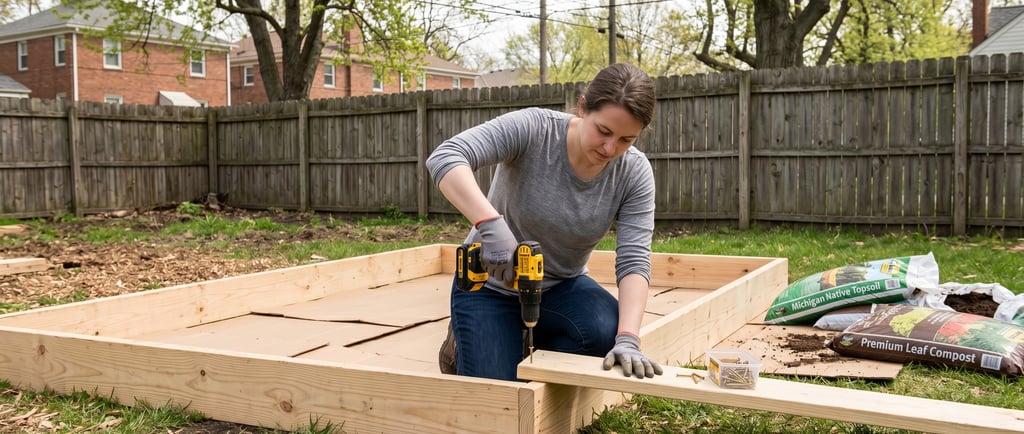
If you have never gardened before, you are in the right place. We will keep this simple, practical, and doable—one step at a time. Looking out at a typical Detroit backyard, you might wonder how to turn a patch of weeds or cracked concrete into a thriving vegetable garden. You might also worry about what is hiding in the urban soil.
Urban gardening is not about having more space or perfect conditions—it is about using the space you have well. A few smart choices can turn a small area into real food for your family. The absolute best way to start growing healthy, safe, and abundant vegetables in an urban environment is by building a raised bed.
Raised beds elevate your plants above the ground. They give you complete control over your soil, look beautiful, and save your back from excessive bending. In this guide, we will walk you through exactly how to build a simple, budget-friendly raised bed right here in Detroit. We will cover the materials you need, the steps to build it, and the common mistakes to avoid. Let us get to work.
Why Raised Beds Make Sense for Detroit Gardeners
Before we pick up a hammer or buy any wood, it is helpful to understand why raised beds are so popular in city environments. They offer specific benefits that directly solve the most common challenges we face in Zone 6 urban gardens.
Protecting Against Soil Contaminants
Detroit has a rich industrial history, but that history sometimes leaves behind heavy metals like lead in our native soil. Planting food directly into untested urban dirt can be a health risk. By building a raised bed and filling it with fresh, clean soil and compost, you create a cleaner, more controlled growing environment. It’s one practical way to reduce risk and feel more confident about what your food is growing in. (Note: Organizations like Keep Growing Detroit offer affordable soil testing if you ever want to plant directly in your yard. If you ever plan to plant directly in the ground, a soil test is a smart first step.)
Warming Up Faster in Spring
Our Zone 6 spring weather is notoriously unpredictable. The ground takes a long time to thaw and dry out. Because raised beds sit above the earth, the sun warms the soil inside them much faster than the ground below. This allows you to start your early cold crops, like radishes and peas, weeks earlier than you could in a traditional ground-level garden.
Better Drainage
Heavy spring rains often turn Detroit yards into muddy puddles. Plant roots need to breathe, and if they sit in freezing mud, they will rot and die. A raised bed naturally drains excess water away, keeping your soil damp but never waterlogged.
Gathering Your Materials and Tools
Building a raised bed does not require advanced carpentry skills. You are essentially building a wooden box without a top or a bottom. For a standard, beginner-friendly bed, we recommend a size of 4 feet wide by 8 feet long, and roughly 10 to 12 inches deep.
Wood Choices
You have a few options when it comes to lumber. The choice usually comes down to your budget.
Cedar: This is the premium choice. Cedar naturally resists rot and insects. A cedar bed will last ten to fifteen years, but the wood is quite expensive.
Untreated Pine: This is the budget-friendly champion. You can buy untreated pine boards very cheaply at any local hardware store. They will not last as long as cedar—usually about three to five years before they start to rot—but they are a fantastic, frugal way to get started.
Do not use pressure-treated wood, old railroad ties, or painted scrap wood. These materials leach harmful chemicals into the soil, defeating the purpose of a clean growing environment.
The Shopping List
Before you start shopping, know that many hardware stores in Detroit will cut your lumber to size for free or a small fee—just ask at the counter. Untreated pine is a budget-friendly choice for first-time builders, and it’s available at most home improvement stores. For soil and compost, see if local garden clubs or community gardens can connect you with quality, affordable bulk options. These small steps can make your project easier and keep costs down while you get started.
Three pieces of 2x10 lumber, 8 feet long (or 2x12 for a deeper bed).
A box of 3-inch exterior wood screws.
Pieces of plain, unprinted brown cardboard (save your shipping boxes).
Soil to fill the bed.
The Tools
A tape measure.
A handsaw or circular saw (or simply ask the hardware store to cut the wood for you).
A drill.
Step-by-Step: Building Your Raised Bed
Once you have your materials, the actual assembly goes very quickly. Grab a friend, family member, or neighbor to help you hold the boards in place.
Step 1: Pick the Right Spot
Vegetables need sunlight. Before you build, spend a day watching the sun move across your yard. You want to place your bed in a spot that gets as much sun as possible—aim for 6+ hours when possible. If your yard has heavy tree cover, do not worry—you can read our guide on vegetables that grow with 4 hours of sun to plan your harvest. Also, try to place your bed relatively close to a water source so you do not have to drag a heavy hose across the entire yard.
Step 2: Cut Your Wood
You need two long sides and two short sides.
Take two of your 8-foot boards and set them aside. These are your long sides. Take the third 8-foot board and cut it exactly in half, giving you two 4-foot pieces. These are your short sides. Many hardware stores will make this cut for you for free when you buy the wood.
Step 3: Assemble the Frame
Find a flat spot in your yard or driveway to put the frame together. Stand one 8-foot board on its edge. Take a 4-foot board and place it at a right angle against the end of the long board, making an "L" shape.
Using your drill, drive three of your exterior wood screws through the outside of the 4-foot board directly into the end of the 8-foot board. Repeat this process for all four corners until you have a sturdy rectangle.
Step 4: Level the Ground
Move your wooden frame to its permanent spot in the yard. Use a shovel to level out any high spots under the wood so the box sits flat against the earth. It does not have to be mathematically perfect, but you want to avoid massive gaps where soil can wash out during a rainstorm.
Step 5: Lay Down the Weed Barrier
You do not need to dig up the grass under your new bed. Instead, break down your plain, brown cardboard boxes. Remove any tape and be sure to avoid glossy or colored cardboard, as these can add unwanted materials to your garden. Lay the cardboard flat directly over the grass at the bottom of your wooden frame. Overlap the edges of the cardboard so no light can get through. This simple layer will suffocate the grass and weeds below. Over the next year, the cardboard will naturally break down and feed the earthworms.
Step 6: Fill With Soil
Healthy plants need healthy soil. Since you are building a new bed from scratch, you need to buy dirt. The best mixture for a raised bed is usually 50% topsoil and 50% compost. A 4×8 bed that’s about 12 inches deep takes roughly 32 cubic feet of soil (about 1.2 cubic yards), so plan ahead before you start shoveling. You can buy bags of soil at the garden center, or for a large 4x8 bed, it is often cheaper to have a local landscape company deliver a yard of "garden mix" soil to your driveway. Shovel the dirt into your frame, smooth it out, and give it a good watering so it settles.
4 Common Mistakes to Avoid
Beginner-friendly does not mean watered down. You will get clear steps, plus the details that help you avoid common mistakes. If it did not work last season, that is not failure—that is information. We adjust, we learn, and we try again. Here are four traps to avoid when building your raised bed.
1. Making the Bed Too Wide
Never build a raised bed wider than four feet. You need to be able to reach the center of the bed from either side without stepping into the dirt. If you make the bed five or six feet wide, you will have to step into the box to harvest your vegetables.
2. Stepping on the Soil
One of the biggest benefits of a raised bed is that the soil stays loose and fluffy, allowing plant roots to grow deeply. If you step or walk on the soil inside the bed, your body weight compresses the dirt into a hard brick. Always stay on the outside of the wooden frame.
3. Using Cinder Blocks Incorrectly
Some gardeners like to build raised beds using concrete cinder blocks instead of wood because they’re inexpensive and easy to stack. For safety, it’s best to use new blocks from a modern hardware store. If you’d like extra peace of mind, you can line the inside with a heavy-duty landscape fabric before adding soil.
4. Forgetting to Leave Pathways
If you are building more than one raised bed, you must leave enough room between them to walk comfortably. Leave at least three feet of space between your boxes. This gives you enough room to push a wheelbarrow, carry a watering can, or crouch down comfortably to pull weeds.
Keep Going and Keep Growing
Building a raised bed is a wonderful weekend project that instantly transforms your outdoor space. It gives you a dedicated, clean, and productive area to grow fresh food for your family. Once your bed is built and filled with soil, the hard part is over. You are now ready to start checking off items on your cold crops spring checklist and putting seeds into the dirt.
You never have to figure all of this out alone. Gardening is a shared practice, and we love learning alongside our neighbors. Joining local groups, like Keep Growing Detroit, or visiting other community spaces is a fantastic way to see different raised bed styles in action and get inspired.
If you want to gain more hands-on experience, ask questions, or just meet other locals who love growing food, we are here for you. We love showing beginners the ropes in our shared spaces.
If you would like to volunteer with us this season, you can find current opportunities here: https://www.eventbrite.com/o/50064615193. Grab a drill, step into the fresh air, and let us start this growing season together!
Contact
LittleDetroitCG@gmail.com
© 2025. All rights reserved.