
Companion Planting Basics for Detroit Gardens: What to Grow Together
Learn the basics of companion planting in Zone 6. Discover which vegetables grow best together in your Detroit urban garden to save space and boost yields.
Kesha P.
5/14/20266 min read
When you look at a packet of seeds, the instructions usually tell you how far apart to space your plants and how much water they need. But they rarely tell you who your plants should live next to. Just like people, plants have neighbors they love and neighbors they absolutely cannot stand.
If you have never gardened before, you are in the right place. We will keep this simple, practical, and doable—one step at a time. The concept of growing certain plants together to help each other is called "companion planting." It is an ancient practice, and it is the perfect strategy for beginners working with small urban yards.
Urban gardening is not about having more space—it is about using the space you have well. A few smart choices can turn a small area into real food for your family. By pairing the right vegetables and flowers in your Detroit garden, you can naturally repel bugs, save space, and grow better-tasting food without spending extra money on chemicals.
Let us explore how companion planting works, the best pairings for our Zone 6 climate, and the common traps to avoid as you plan your raised beds this season.
Why Companion Planting Works in Urban Gardens
In a natural forest or meadow, plants do not grow in perfectly straight rows of a single species. They grow in diverse, mixed communities. Companion planting simply copies how nature already works. When we apply this to our backyard gardens, we unlock several massive benefits.
Natural Pest Control
Detroit summers bring a variety of hungry bugs to our yards. Instead of buying expensive chemical sprays, you can use plants to do the heavy lifting. Certain strong-smelling herbs and flowers confuse insect pests. When a tomato hornworm smells a tomato plant, it wants to eat it. But if that tomato plant is surrounded by pungent basil or marigolds, the bug cannot find its target and moves on.
Saving Precious Space
When you only have one or two raised beds, every square inch counts. Companion planting allows you to mix fast-growing plants with slow-growing plants. For example, radishes sprout and finish growing in just a few weeks. If you plant them next to slow-growing carrots, you can harvest the radishes right as the carrots finally need that extra room to stretch out.
Boosting Soil Health and Flavor
Some plants actively improve the dirt around them. Beans and peas, for example, have a special ability to pull nitrogen from the air and push it down into the soil. This feeds the heavy-eating plants growing right next to them. Additionally, many seasoned gardeners swear that pairing certain crops, like tomatoes and basil, actually makes the tomatoes taste sweeter when harvest time rolls around.
Best Plant Pairings for Detroit (Zone 6)
Ready to start matchmaking in your garden? Here are a few foolproof plant pairings that thrive in our specific Michigan climate. These combinations are budget-friendly, easy to grow, and perfect for beginners.
1. Tomatoes, Basil, and Marigolds
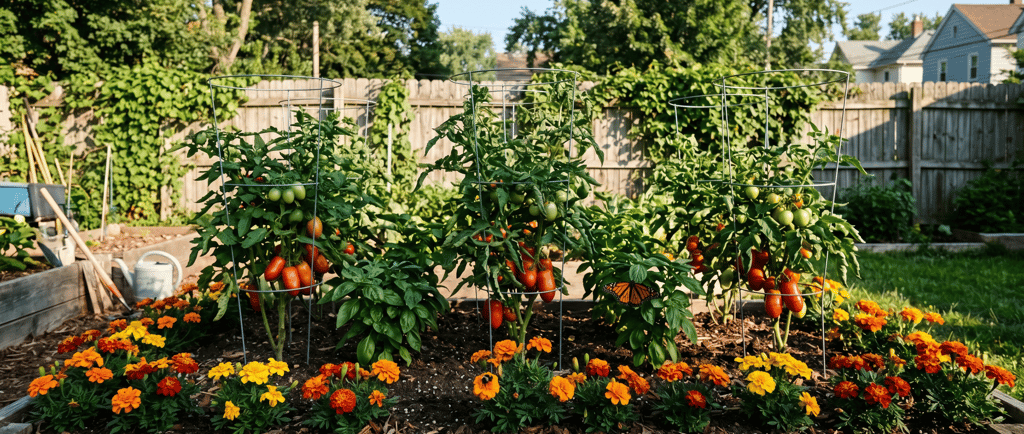
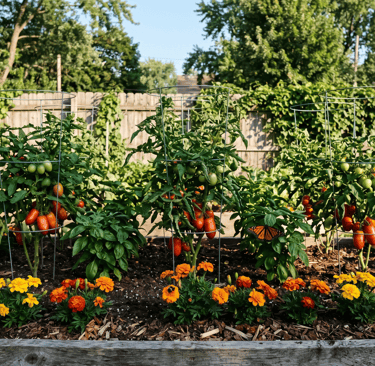
This is the classic companion planting trio. Tomatoes are a staple in almost every summer garden, but they are vulnerable to pests. Planting basil near the base of your tomato plants helps mask the scent of the tomatoes from harmful insects. Marigolds add a pop of cheerful color and release a scent that naturally repels microscopic soil pests called nematodes, which love to attack tomato roots.
2. Carrots and Radishes
If you are getting a head start on your cold crops spring checklist, this is the pairing for you. Carrots take a notoriously long time to sprout, and their seeds are incredibly tiny. If you mix carrot seeds and radish seeds together before planting, the fast-growing radishes will break up the hard surface of the soil as they sprout. This creates a gentle pathway for the delicate carrot sprouts to follow. You harvest the radishes in 30 days, leaving the carrots plenty of room to grow big and strong.
3. Cucumbers and Nasturtiums
Cucumbers love to vine and sprawl, taking up a lot of room. They also attract pests like cucumber beetles. Nasturtiums are beautiful, edible flowers with a slightly peppery taste. When planted near cucumbers, nasturtiums act as a "trap crop." The bugs prefer the taste of the flowers over the cucumbers. They will eat the flowers and leave your valuable vegetable harvest completely alone.
4. Spinach, Lettuce, and Tall Trellises
When the hot Detroit summer arrives in July, delicate leafy greens tend to wilt and turn bitter. You can extend your harvest by using companion planting for shade. Plant your spinach and loose-leaf lettuce in the shadow of a tall, climbing plant like pole beans or peas. The tall plants will block the harsh afternoon sun, keeping the soil cool and giving your greens the gentle environment they need. If your whole yard is fairly shady, do not worry—just check our guide on vegetables that grow with 4 hours of sun.
Plants That Do Not Get Along
Just as some plants are best friends, others are terrible neighbors. Placing the wrong plants next to each other creates unnecessary competition for water and nutrients. Sometimes, they even attract diseases to one another. Keep these rivals far apart in your garden.
Onions and Beans
Onions, garlic, and chives are fantastic at repelling pests, but they secrete a substance into the soil that actively stunts the growth of beans and peas. If you plant them together, your bean plants will look yellow, weak, and refuse to produce food. Keep your alliums (the onion family) on the opposite side of the yard from your legumes.
Tomatoes and Potatoes
These two plants belong to the same botanical family (the nightshade family). Because they are closely related, they are attacked by the exact same diseases, particularly a devastating fungus called "blight." If you plant them next to each other, a disease that hits one will instantly wipe out the other. Give them entirely separate spaces to keep your harvest safe.
Fennel and Almost Everything Else
Fennel is a delicious herb with a strong licorice flavor, but it is the ultimate bad neighbor. It releases chemical compounds from its roots that slow down or completely stop the growth of almost any vegetable planted near it. If you want to grow fennel, put it in its own isolated pot in the corner of your patio.
4 Common Companion Planting Mistakes
Beginner-friendly does not mean watered down. You will get clear steps, plus the details that help you avoid common mistakes. If it did not work last season, that is not failure—that is information. We adjust, we learn, and we try again. Here are four common traps to watch out for as you plan your layout.
1. Forgetting to Leave Breathing Room
It is tempting to pack as many companion plants into a raised bed as possible to maximize your space. However, plants still need proper airflow. If leaves are crammed together tightly, moisture gets trapped, and fungal diseases will quickly spread through our humid Michigan summers. Always respect the basic spacing guidelines on your seed packets, even when mixing different plants together.
2. Ignoring Sunlight Needs
You might read that a certain flower is a great companion for a specific vegetable, but they might have completely different light requirements. For instance, putting a shade-loving plant right next to a sun-worshipping pepper plant will end in disaster for one of them. Always make sure that the "friends" you are pairing up actually enjoy the same type of weather and sunlight.
3. Skipping the Flowers
When people start a vegetable garden to save on grocery bills, they often view flowers as a waste of space. This is a massive mistake. Vegetables need to be pollinated to produce food. If you do not plant flowers like zinnias, marigolds, or native coneflowers among your vegetables, the bees will not visit. No bees means no tomatoes, cucumbers, or squash. Flowers are a critical part of the companion planting puzzle.
4. Overthinking the Layout
Some gardening books make companion planting look like a complicated math equation with strict grids and charts. Do not let it overwhelm you. Start incredibly small. Pick just one pairing—like tomatoes and basil—and try it this year. Observe how they grow together. Gardening is about trial and error, and you will learn exactly what works for your specific yard over time.
Keep Going and Keep Growing
Planning your garden layout is one of the most exciting parts of the spring season. By pairing the right plants together, you are creating a cooperative, resilient environment that naturally fights off pests and yields abundant food. You are working with nature, rather than fighting against it.
Start small this year. Tuck a few marigolds next to your tomatoes or mix some radish seeds into your carrot rows. Watch how the plants interact. Over time, you will develop a deep understanding of what thrives in your unique urban space.
You never have to figure all of this out alone. Gardening is a shared practice, and we love learning alongside our neighbors. Whether you want to swap seeds, ask questions about your layout, or simply enjoy a sunny afternoon outdoors, our community is here for you.
If you would like to volunteer with us this season, you can find current opportunities here: https://www.eventbrite.com/o/50064615193. Grab a trowel, step into the fresh air, and let us start this growing season together!
Contact
LittleDetroitCG@gmail.com
© 2025. All rights reserved.